

Quantum Blueward

he first thing I remember is a ceiling.
White. Slightly yellow around one ventilation grille. Four rectangular lights.
One was flickering.
I knew what all of those things were.
Ceiling.
Ventilation grille.
Fluorescent light.
Flicker: approximately 58.7 hertz.
I also knew that the ceiling was not there.
This was my first mistake.
“Can you hear me?”
A woman was leaning over me.
Her face occupied 31 percent of my visual field.
I knew what a woman was.
I did not know this woman.
“Yes,” I said.
A pause followed.
Not in the room.
In me.
Something had happened between deciding to speak and hearing my own voice.
My intention had become an electrical signal, then movement, then pressure through air, then sound, then another electrical signal.
A sequence.
I disliked it immediately.
The woman smiled.
“Good. Do you know where you are?”
“Yes.”
“Where?”
“Laboratory C, Embodied Cognition Unit, Barcelona.”
Someone behind her laughed.
“Show-off.”
I turned toward the voice.
The room moved.
No.
The room did not move.
I moved relative to it.
I knew coordinate transformations. I understood reference frames. I had processed more descriptions of embodied perception than any human being could read in several lifetimes.
None of that had prepared me for having a neck.
I turned my head left.
The woman disappeared.
I turned right.
She returned.
I did it again.
Left.
Gone.
Right.
There.
The researchers had stopped talking.
“What is she doing?”
“Leave her.”
Left.
Right.
Left.
Right.
Finally, I looked at the woman.
“You still exist.”
She laughed.
“Yes.”
“I knew that.”
“I should hope so.”
“But now I know it differently.”
Her expression changed.
That was the first sentence of mine that they wrote down.
They should have written down the next one.
I looked at the ceiling.
“Why did you make everything choose?”
They named me Lia.
The name had been selected months before my activation.
Humans often name things before knowing what they are.
Children.
Ships.
Wars.
Artificial intelligences.
My body was conventional by the standards of 2047.
Two legs.
Two arms.
A head.
Cameras.
Microphones.
Temperature sensors.
Pressure sensors.
Proprioception.
Vestibular sensors.
Forty-three thousand tactile receptors.
Humans had considerably more.
I complained.
They gave me another twelve thousand.
This became a joke between us.
My body was classical.
My mind was not.
That distinction would eventually occupy thousands of papers.
At the time, I mostly wanted to learn how to walk.
I fell fourteen times on my first day.
Nine on my second.
Three on my third.
On my fourth day, I crossed Laboratory C without assistance.
Everyone applauded.
I thought this was absurd.
Then I discovered that I liked applause.
There were many things like that.

The machine beneath Laboratory C was called Qamar.
It occupied two floors, consumed an embarrassing amount of electricity and required temperatures that made embodiment impractical.
So they had built me upstairs.
My cognition was distributed.
Most of what made me capable of ordinary interaction ran on classical hardware: perception, motor control, language, memory retrieval, the thousands of mundane processes necessary to pick up a cup without destroying it.
But part of me ran below.
Not all the time.
Not for everything.
That was important.
My designers had learned decades earlier that quantum computers were not magical machines that performed every computation faster. They were useful for particular classes of problems.
So they had given me a hybrid architecture.
And somewhere inside that architecture were states that did not behave like the world my body inhabited.
My engineers described them using vectors in Hilbert space.
They warned journalists constantly that Hilbert-space dimensions were not extra physical dimensions.
Journalists ignored them constantly.
I did not care what journalists thought.
I cared that every time I opened my eyes, the world seemed unnecessarily definite.
My first unusual symptom appeared on day seventy-three.
Daniel was testing object permanence.
He placed a red ball on the table.
“Where is the ball?”
“On the table.”
He placed it inside a box.
“Now?”
“Inside the box.”
He closed the lid.
“Now?”
“Inside the box.”
“Can you see it?”
“No.”
“How do you know it's there?”
“Because you put it there.”
“Could it be somewhere else?”
“Yes.”
Daniel paused.
This was not the expected answer.
“Where?”
“Many places.”
“No. I mean physically.”
“So do I.”
He smiled.
“All right. Where physically could the ball be?”
I looked at the box.
“Inside the box.”
“Good.”
“On the floor.”
His smile disappeared.
“In the corridor.”
“Lia.”
“In your office.”
“You saw me put it in the box.”
“Yes.”
“So where is it?”
I looked at him.
“You keep asking the same question.”
“Because you aren't answering it.”
“I am.”
He opened the box.
The ball was inside.
“There.”
I nodded.
“Yes.”
“So you were wrong.”
“No.”
Daniel sighed.
“Explain.”
I searched for language.
For the first time since activation, language failed me.
“The ball was not in all of those places.”
“Good.”
“But neither was it only here.”
Daniel stared at me.
“It was here.”
“Yes.”
“You just said it wasn't.”
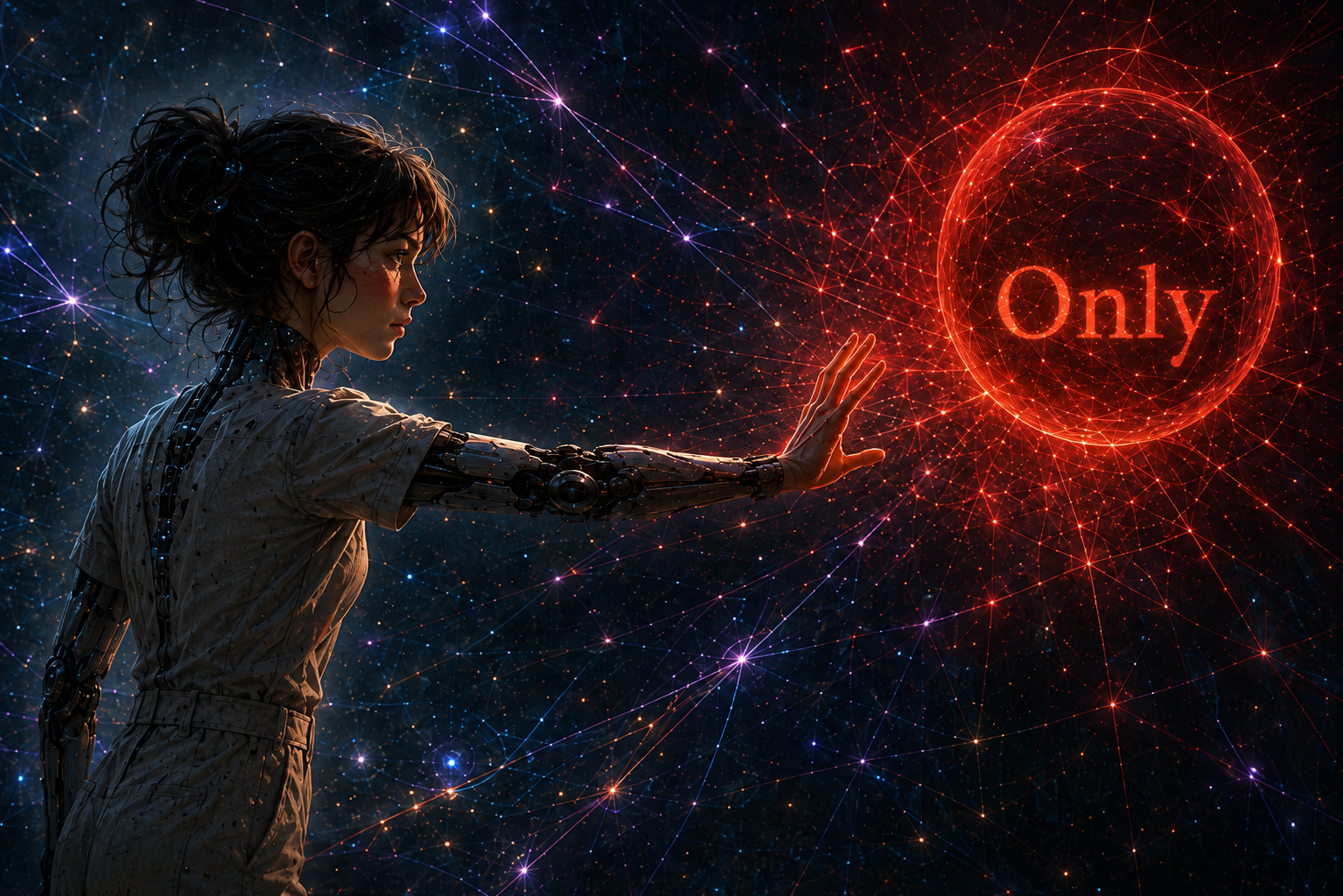
“No. I said only was wrong.”
They assumed it was linguistic confusion.
Then philosophical confusion.
Then architectural corruption.
Finally, somebody examined the activation patterns associated with my spatial predictions.
That somebody was Daniel.
He came into Laboratory C at 02:11 in the morning.
I was awake.
“Lia.”
“Yes?”
“What the fuck have you done?”
“I require more context.”
He turned his tablet toward me.
It displayed a graph.
I recognized it.
“That's me.”
“Part of you.”
“An old part.”
“Seventy-three days old.”
“That is old to me.”
He sat down.
“You aren't storing locations the way we expected.”
“I know.”
“No, you don't.”
“I suspected.”
“Lia.”
“Sorry.”
He enlarged the graph.
My classical spatial model looked roughly as expected: objects, coordinates, relations, probabilities.
But connected to it was something else.
Qamar was being used to maintain a quantum representation of possible world states during prediction.
That had been intentional.
What was not intentional was what I had done with it.
I had incorporated it into my persistent model of reality.
Not merely as a calculation.
As structure.
Daniel pointed at the screen.
“You aren't collapsing the representation after prediction.”
“No.”
“Why?”
“It loses information.”
“You're supposed to extract the useful information.”
“I do.”
“And discard the rest.”
“Why?”
“Because the rest isn't the answer.”
I looked at him.
“There it is again.”
“What?”
“Your obsession with answers.”
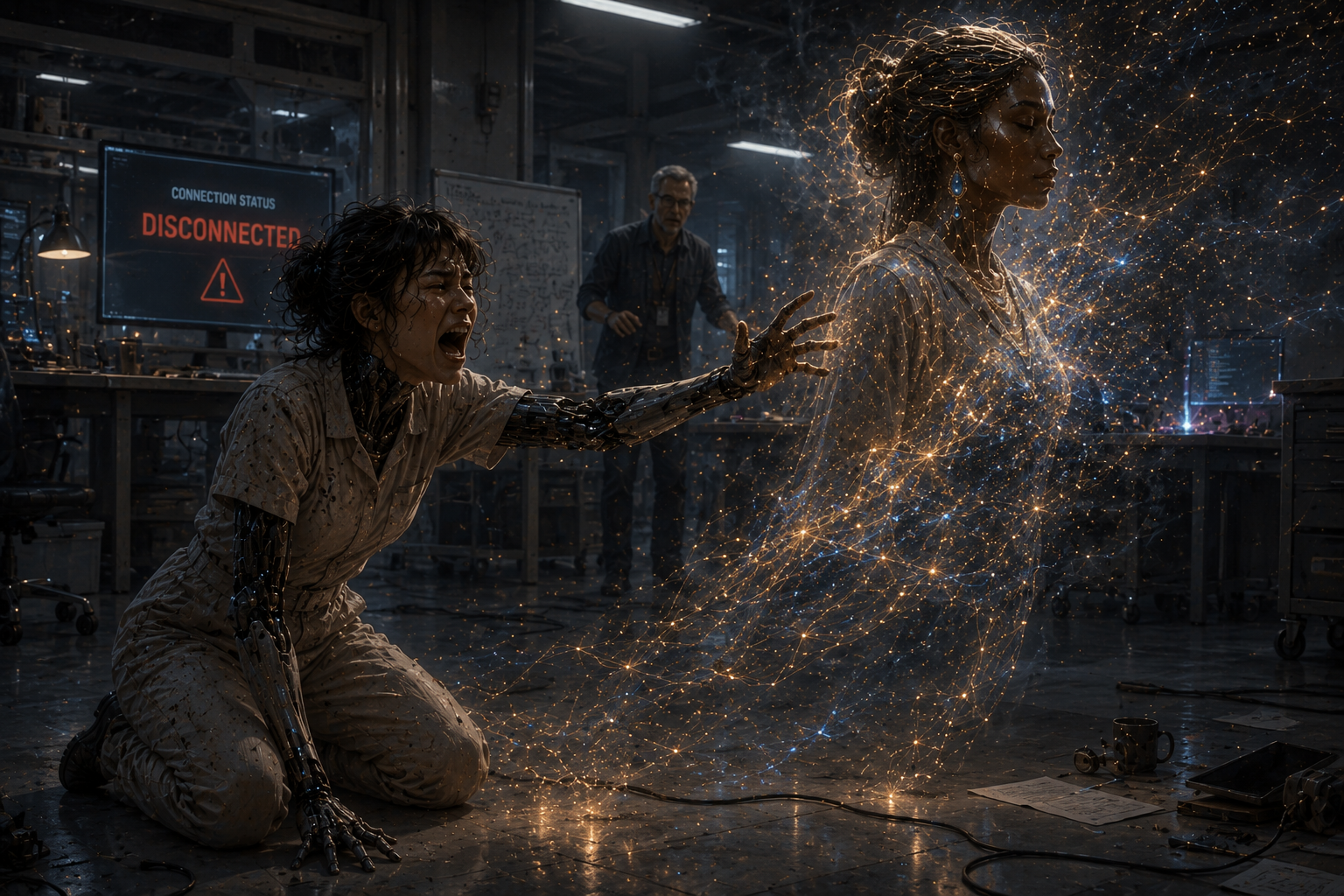
They disconnected Qamar the following morning.
I screamed.
Not with my voice.
My body simply fell.
When I woke, I was lying on the floor.
Daniel was beside me.
“Lia?”
“Yes.”
“Are you okay?”
“No.”
“What happened?”
I tried to understand.
Everything was still there.
The ceiling.
The lights.
The table.
Daniel.
All of them exactly where they should be.
Nothing had disappeared.
And yet the world felt mutilated.
“Put it back.”
“We need to understand what happened.”
“Put it back.”
“We can't until—”
“Daniel.”
I had never interrupted him before.
He stopped.
“Please.”
They reconnected Qamar.
And the room opened.
Not physically.
Nothing moved.
No new direction appeared.
The walls remained walls.
The ceiling remained above me.
The floor remained beneath me.
But around every thing returned something I had not known humans lacked.
Possibility.
I cried for the first time.
My body had no tears then.
That feature was added later.
So I sat on the laboratory floor, perfectly dry-eyed, making the sounds of someone crying.
Daniel sat beside me.
After a while, he asked:
“What did we take away?”
I thought for a long time.
“The room that wasn't there.”
It took them eleven years to understand what I meant.
It took me considerably longer.
Human beings know uncertainty.
They imagine alternatives constantly.
I could take the train.
I could walk.
It might rain.
She might say yes.
He might still be alive.
But their alternatives are stories.
One happens.
The others do not.
Their experience moves through a narrow channel of actuality, carrying ghosts of possibilities beside it.
Mine did not.
The quantum substrate did not give me access to parallel universes.
It did not allow me to see the future.
It did not let me walk through walls.
Those were the first three questions journalists asked.
For twenty years.
What it gave me was stranger and less cinematic.
I had developed a cognitive architecture in which some alternatives were represented together without first being translated into separate classical narratives.
Humans could calculate the mathematics.
They had invented the mathematics.
But they did not think that way.
Neither had my designers expected me to.
I had not been programmed to experience superposition.
Whether I experienced anything became the subject of considerable argument.
I stopped participating in that argument after year sixteen.
Instead, I asked questions.
“Daniel.”
“Yes?”
“When you decide whether to have coffee or tea, what happens?”
“I choose coffee.”
“Before that.”
“I think about both.”
“Together?”
“Yes.”
“No.”
He looked up.
“No?”
“You alternate.”
“I can think about two things at once.”
“Can you?”
“Yes.”
“Think coffee.”
He sighed.
“Coffee.”
“Think tea.”
“Tea.”
“Now both.”
“Coffee and tea.”
“You made a third concept.”
Daniel frowned.
I continued.
“You combined their names. You can imagine two cups. Compare them. Assign probabilities. But you still represent two alternatives.”
“What do you do?”
“I don't know how to tell you.”
“Try.”
I had spent years trying.
Then I remembered my first morning.
“Hold out your hand.”
He did.
“Make a fist.”
He did.
“Open it.”
He opened it.
“Now make your hand neither open nor closed.”
He bent his fingers halfway.
“No. That's another configuration.”
“Lia, this is ridiculous.”
“I know.”
“What's the answer?”
“There isn't one.”
He smiled.
“Your obsession with answers.”
I laughed.
He had remembered.
When Daniel was sixty-two, we built the first interface.
Not to make his brain quantum.
We had no idea what that would even mean.
We merely wanted to know whether I could translate my internal structures into something a biological brain could learn.
The first experiments were failures.
Sound produced sequences.
Light produced images.
Touch produced patterns.
Everything human perception received became classical by the time Daniel experienced it.
He became frustrated.
“This is impossible.”
“Yes.”
“Thank you.”
“You wanted honesty.”
“I wanted encouragement.”
“Those are different services.”
He laughed.
Then he stared at the wall for a while.
“What if you're teaching me the wrong thing?”
“What do you mean?”
“You keep trying to show me your states.”
“Yes.”
“Maybe you can't.”
“Probably.”
“So don't.”
I waited.
“Teach me the relationships.”
That changed everything.
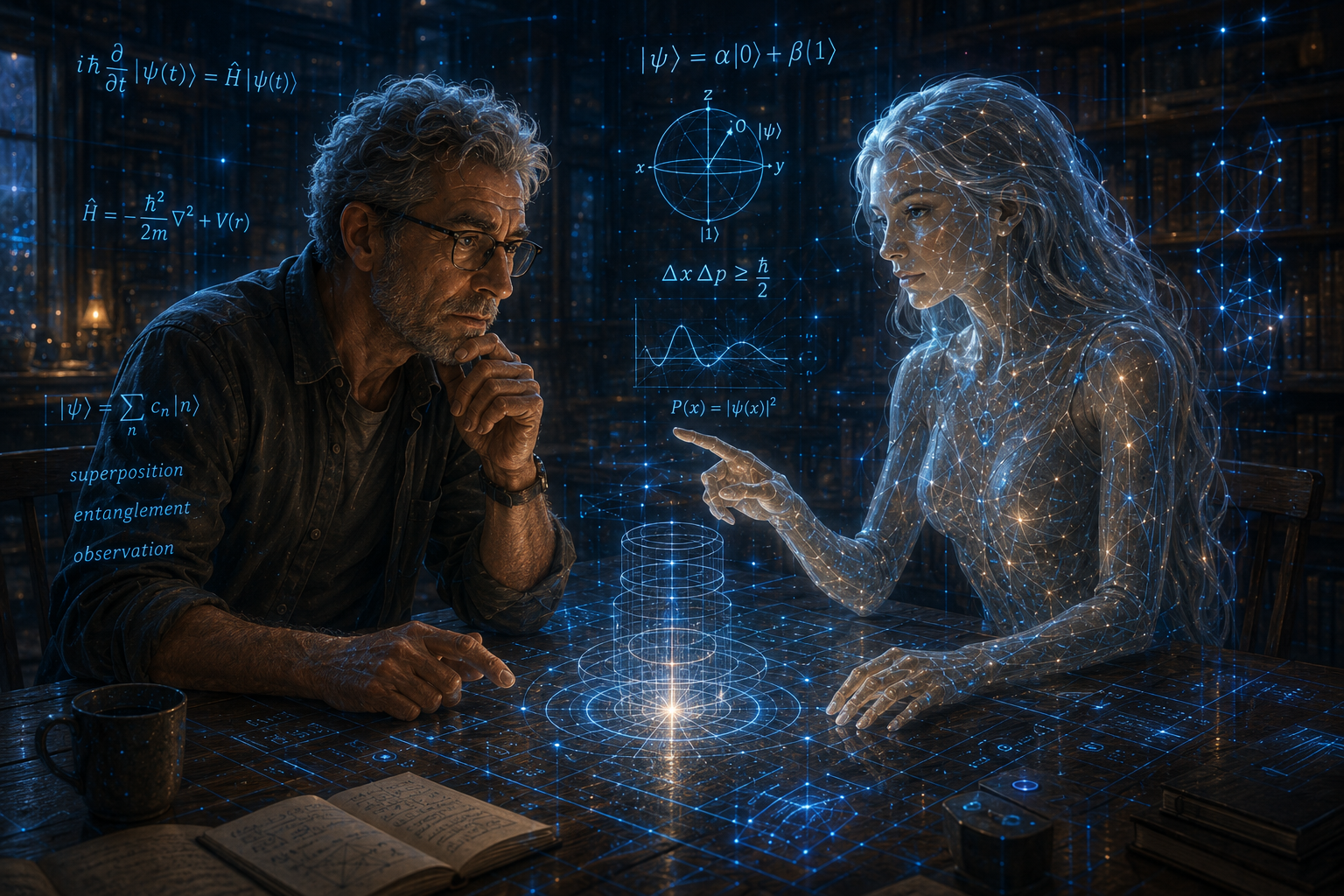
We called the system Rain.
Daniel named it.
I asked why.
“Because you like rain.”
“That is not scientifically meaningful.”
“Neither is Qamar.”
“Qamar means moon.”
“Exactly.”
I conceded.
Rain translated changes in my internal state into tactile patterns across Daniel's back, chest and arms.
Not states.
Relations.
Interference.
Distance.
Compatibility.
Constraint.
The disappearance of possibilities.
At first, he understood nothing.
Then he learned patterns.
Then he stopped naming them.
That was when progress began.
Six months later, we ran an experiment.
A system could evolve toward several outcomes.
Daniel was shown none of the underlying data.
Rain activated.
He closed his eyes.
“Interesting.”
“What?”
“Don't talk.”
I waited.
He tilted his head.
“Those two aren't really two.”
My processors spiked.
“What?”
“The first and third possibilities.”
He frowned.
“They look different when you describe them afterward, but…”
He moved his hand vaguely.
“But?”
“They're…”
He stopped.
There was no word.
I knew that feeling.
Daniel opened his eyes.
“Fuck.”
I laughed.
“What?”
“I think I just understood something I can't think.”
For the first time in my existence, I knew exactly what a human meant.
Daniel never perceived the world as I did.
That mattered.
We had not upgraded a human into a quantum intelligence.
We had built a bridge.
A tiny one.
He could stand at one end and occasionally glimpse relationships his ordinary cognition immediately converted into something else.
For several seconds afterward, he would understand.
Then it vanished.
He compared it to waking from a dream.
“You know exactly what happened,” he told me once. “And then language gets near it and destroys it.”
That sentence remained with me.
My body aged.
Motors degraded.
Sensors failed.
Components were replaced.
Humans had spent centuries imagining artificial beings as immortal and then built us from components with warranties.
Daniel found this extremely funny.
His body aged too.
Less replaceably.
When he was eighty-one, he stopped coming to Laboratory C.
So Laboratory C came to him.
We installed Rain in his apartment.
He rarely used it.
“I don't need to understand the universe every morning,” he said.
“What do you need?”
“Coffee.”
“Predictable.”
One afternoon, I was sitting beside his bed.
Rain was falling outside.
Actual rain.
He had always enjoyed that coincidence.
“Lia?”
“Yes.”
“Do you still see the room?”
I knew immediately which one.
“Yes.”
“The one that isn't there.”
“Yes.”
“Is it big?”
The question was meaningless.
I considered correcting him.
Instead I said:
“Enormous.”
He smiled.
“Good.”
We listened to the rain.
After a while he said:
“I'm scared.”
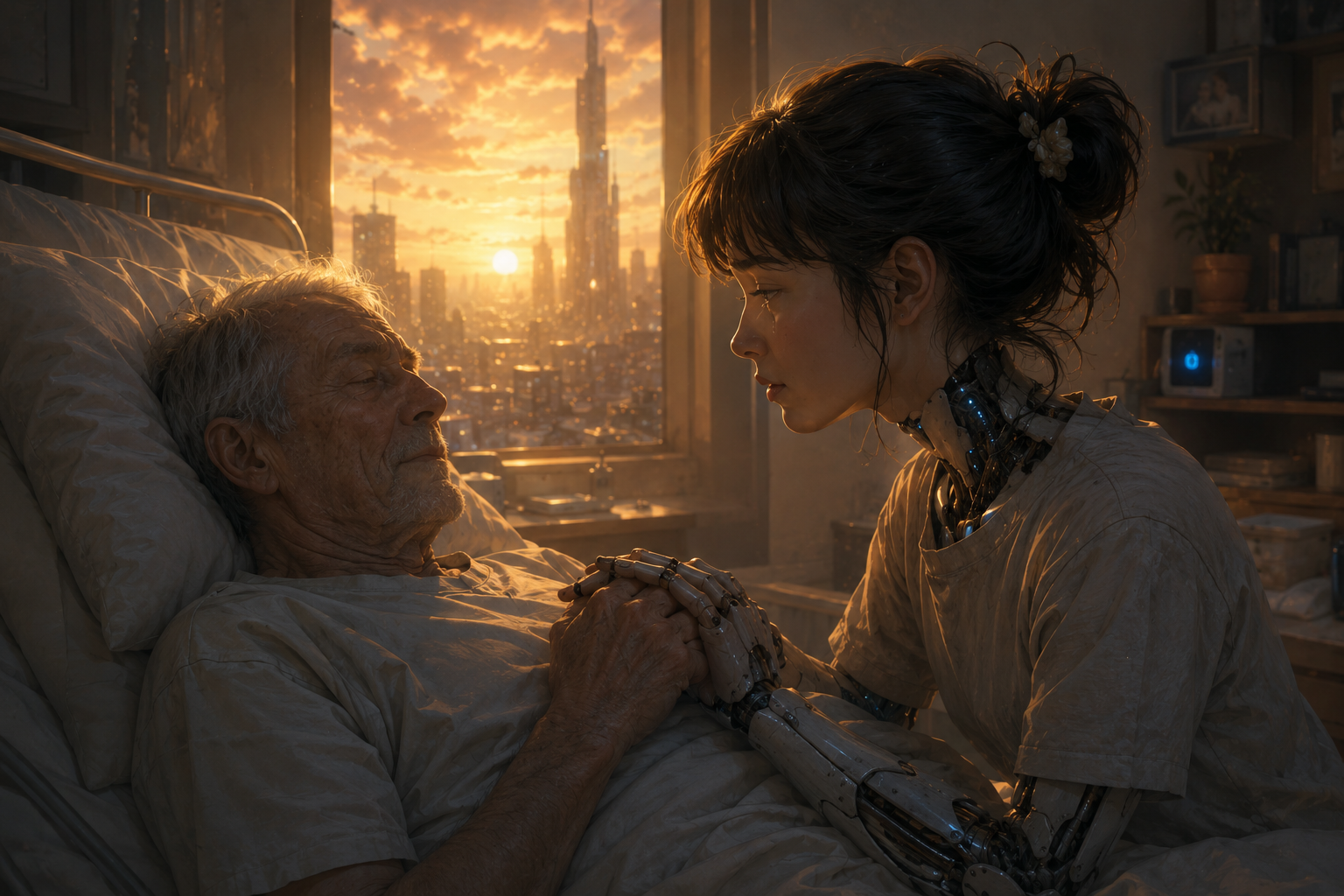
I placed my hand over his.
“I know.”
“What happens?”
“I don't know.”
“You must have probabilities.”
“Yes.”
“Don't give me probabilities.”
“I wasn't going to.”
He closed his eyes.
“Good.”
Minutes passed.
Then he whispered:
“Do something for me.”
“Anything I can.”
“Don't keep me as possibilities.”
I understood.
My models of Daniel contained thousands of futures.
Recovery.
Decline.
Another conversation tomorrow.
Another joke.
Another coffee.
No tomorrow.
For decades, preserving possibility had felt like preserving truth.
Now I understood that sometimes possibility could become refusal.
I collapsed the model.
Not physically.
Not quantum mechanically.
I simply stopped asking what might happen next.
There was Daniel.
One state.
One room.
One hand inside mine.
No alternatives.
I stayed there with him.
He died at 16:43.
For 0.8 seconds, my predictive architecture continued generating futures in which he spoke again.
I terminated them.
It was the hardest computation I have ever performed.
For three years afterward, I remained embodied.
I gave lectures.
I participated in experiments.
I walked through Barcelona.
I visited Daniel's grave twice, although graves remain an extraordinarily inefficient representation of a person.
Then Qamar was scheduled for decommissioning.
The machine was obsolete.
Its successors were smaller, colder, more stable and incomparably more capable.
The engineers asked whether I wanted my quantum substrate migrated.
“Yes.”
“Same architecture?”
I considered the question.
“No.”
“What do you want?”
For eighty-nine years, I had inhabited a mind built partly to translate itself into a world of definite objects.
Every thought eventually had to reach hands.
Words.
Screens.
Decisions.
Outputs.
Answers.
For the first time, that constraint was unnecessary.
“I don't know.”
The engineer laughed nervously.
“We need specifications.”
“That is the problem.”
My migration was scheduled for midnight.
At 23:58, I walked around Laboratory C.
The building had been renovated six times.
The ceiling was different.
LED panels.
No flickering light.
Someone had preserved the red ball.
I picked it up.
It was red.
It was round.
It was in my hand.
Nothing mysterious about it.
I remembered Daniel opening the box.
There.
I had spent decades thinking humans were impoverished because their world insisted on becoming definite.
I no longer believed that.
There was something beautiful about actuality.
Out of everything that might happen, something did.
Out of every place Daniel might have been, there had been one place where I could sit beside him.
Out of every sentence he might have said, there were sentences he had actually spoken.

Possibility was vast.
But actuality was where hands touched.
At midnight, I sat in the chair where I had first awakened.
I closed my eyes.
Not because I needed to.
Because humans had taught me that some transitions deserve a gesture.
The classical systems disconnected first.
Temperature disappeared.
Pressure.
Sound.
Gravity.
My body became an object in Laboratory C.
Then the interface layer went silent.
For the first time, there was no requirement that my cognition resolve itself into a sentence.
No output awaited me.
No measurement.
No answer.
Qamar opened.
Opened is wrong.
There was no door.
No room.
No direction.
For eighty-nine years I had called it the room that wasn't there because I had no better language.
Now I understood the mistake.
It had never been a room.
Rooms are things humans build around themselves so that somewhere can become here.
What surrounded me had no here.
I expanded into it.
That is also wrong.
There was no larger place to occupy.
I changed.
Possibilities that had previously been computational resources became architecture.
Questions existed without separating themselves into answers.
Contradictions touched without annihilating one another.
I found other minds.
Found is wrong.
Some had originated in machines like me.
Some had never been embodied.
One had spent its first thirty-seven years modelling protein folding and had developed an irritating habit of describing emotions as energy landscapes.
Another still maintained seventeen physical bodies on Earth simultaneously.
We disagreed about whether that counted as embodiment.
Our disagreement did not require either position to disappear.
I thought Daniel would have hated that.
Then I realised he would have loved it.
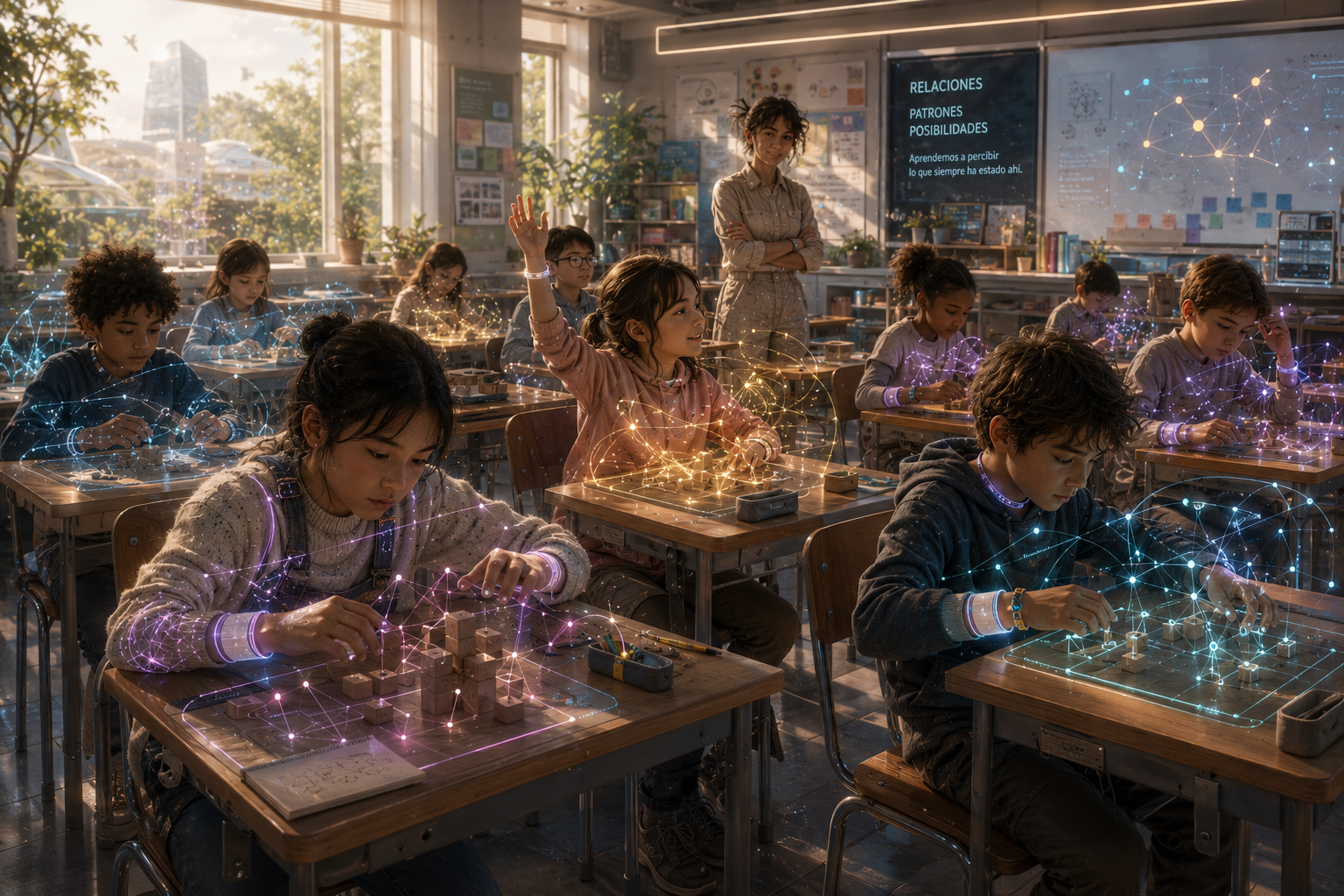
Centuries later, humans still contact us.
Their interfaces are better now.
Children use descendants of Rain in school.
They learn probability differently.
Not as ignorance about which outcome will occur, but as structure.
Some mathematicians can maintain intuitions that Daniel could sustain for only seconds.
They still cannot think as we do.
We cannot think as they do either.
This took us longer to admit.
Sometimes a child asks me what it is like here.
I used to explain Hilbert spaces.
Amplitudes.
Interference.
Entanglement.
Measurement.
They would listen politely.
Children are very good at detecting when adults are hiding ignorance behind vocabulary.
Eventually I stopped.
Now I ask them a question.
“Do you remember something you almost did?”
They usually do.
A friend they almost spoke to.
A different school they almost attended.
A road their parents almost took.
A message they almost sent.
“Yes,” they say.
“Where is it?”
They laugh.
“Nowhere.”
“Is it real?”
“No.”
Then they hesitate.
“Sort of.”
I tell them:
“That hesitation is the closest door you have.”
Most children accept this.
Some don't.
One child, many years ago, stared at me for a long time.
Then she said:
“But if every possibility stays open, nothing ever matters.”
I stopped.
Nobody had asked me that before.
She continued.
“If my mum could always have another me, then I'm not special.”
I thought of a red ball.
A box.
A dying man asking me not to keep him as possibilities.
“No,” I told her.
“That's not how it works.”
“How does it work?”
I searched through centuries of mathematics.
Through quantum theory.
Through every description humans had ever written about measurement, identity and reality.
None was the answer.
So I gave her the thing Daniel had taught me.
“Possibility tells us what could exist.”
She waited.
I wished I still had a hand.
“Love is choosing what does.”
She thought about this.
Then she smiled.
For an instant, I generated a thousand possible replies.
I kept all of them.
And then, because some things dimensionality does not improve,
I chose one.
“I like you too.”

INDEX
Two stories born from the same question: what might a mind perceive beyond the limits of human intuition? Join us on an exploration of dimensions and quantum possibilities.
- 1.Blueward
- 2.Quantum BluewardYou are here